
12 Questions to Ask a Kitchen Remodeler in North Atlanta Before You Sign Anything
The questions to ask a kitchen remodeler matter less than how you listen to the answers. Most "questions to ask your contractor" lists are written backwards. They tell you what to ask and never what a good answer sounds like. You end up with a clipboard full of yeses, a signed contract, and no real idea whether the person standing in your kitchen is going to finish the job on time.
A licensed, insured, well-reviewed remodeler can still leave you with a stalled project, a stack of change orders you didn't see coming, and a stove sitting in your dining room for six weeks. Screening questions filter out the obvious problems. The diagnostic questions, the ones most homeowners never ask, tell you whether this person can actually run a project.
Here's what this guide covers:
The screening questions that filter out unqualified contractors, including license, insurance, permits, and references
The diagnostic questions that actually predict whether your project finishes on time and on budget
What a strong answer sounds like versus a weak one, for every major question
Red flags that show up disguised as reassuring answers
Questions specific to older homes, wall changes, and living in the house during the remodel
The three questions to ask references that outperform every other reference question
Answers to the most common follow-up questions homeowners have before hiring
License and insurance still matter, and we'll get to them. But the questions that predict whether your kitchen finishes in twelve weeks or twenty are the ones nobody puts at the top of the list.
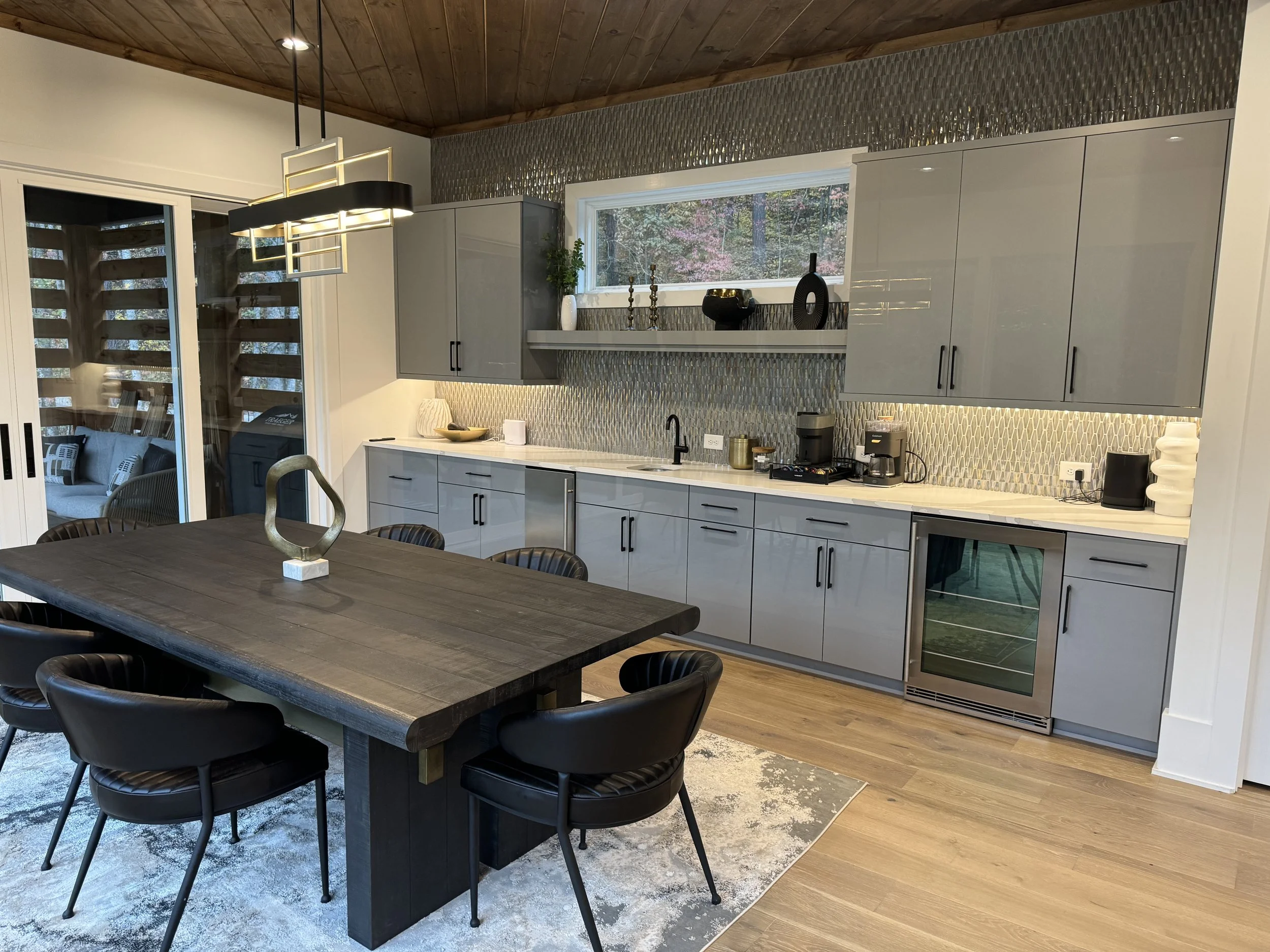
Grand Home Design serves Milton, Johns Creek, Alpharetta, Cumming, and the greater North Metro Atlanta region. Request a free design consultation or view our portfolio.
Start With the Screening Questions, Then Move On
These are table stakes. If a remodeler can't clear them, the conversation is over. If they can, you've learned almost nothing about whether they're any good.
Are you licensed and insured in this state?
Get the license number and verify it yourself. Most states have a free online lookup. In Georgia, residential and general contractor licenses can be verified through the Georgia State Licensing Board for Residential and General Contractors, accessible through the Secretary of State's website here.
Mid-range full remodel ($55,000 to $95,000)
New cabinets, quartz or upgraded stone counters, new appliances, full tile work, updated lighting and electrical, possibly minor plumbing changes, and maintaining the same general footprint. This is the most common project in Johns Creek and the one most homeowners want when they say "remodel."
There should be two insurance policies, not one. General liability covers damage to your home. Workers' comp covers injuries to anyone working on it. Ask for a certificate of insurance with your name listed, sent directly from the insurance agent. Anything else can be edited in a PDF.
Do you pull the permits, or do I?
If the remodeler asks you to pull the permit, take it seriously. In most jurisdictions, the person who pulls the permit is the party the building department holds responsible for code compliance. Reputable remodelers pull their own permits because they're confident the work will pass inspection. The ones who push it back on you often aren't.
Can I see three references from projects completed in the last year?
Two details matter here. "Last year" filters out the contractor coasting on a great job from 2019. "Three" gives you enough material to spot patterns. One unhappy reference could be a coincidence, but two is a developing pattern.
The Questions That Help Predict the Outcome
Here's where most articles stop being useful. The next set is what separates a contractor who looks good in a sales meeting from one who can run your project from demo to punch list.
How do you handle change orders?
This is the single most useful question in the entire conversation. Ask for three things: a written change order policy, the typical markup on owner-requested changes, and how they price changes the contractor discovers during the work.
A strong answer sounds like this. "Every change goes in writing before the work starts. You sign off, we sign off, then it gets built. Owner-requested changes are cost plus 15%. If we open a wall and find something unexpected, like a rotted sill plate or old knob-and-tube wiring, we stop, document it, give you a written price, and wait for approval before continuing." Markups vary by contractor and typically range from 10% to 25%.
A weak answer sounds like "we just keep track and settle up at the end." Walk away from that one. Change orders are where remodels quietly go over budget, and "settling up at the end" means you find out what it cost when there's no leverage left to push back.
What does your payment schedule look like?
You want milestone-based, not date-based. A schedule tied to completed work, say 10% at signing, 25% at demo and rough-in, 30% at cabinet install, 25% at countertop template and finish carpentry, and 10% at punch list, protects both sides. A schedule tied to dates, like one third at week two and one third at week four, pays the contractor for time instead of progress.
Be cautious about large deposits. Deposit rules vary by state. Before signing, check current Georgia consumer protection guidance or ask your contractor to point to the statute that governs their deposit terms. Anything above 10 to 15% upfront on a mid-sized kitchen project deserves a real explanation.
Who is actually doing the work, and will they be the same people the whole time?
Most kitchen remodels involve a mix of in-house crew and subcontractors. That's fine. What you want to know is who runs the job day to day, whether the lead carpenter stays consistent from start to finish, and which trades are subbed out.
Cabinet installers, electricians, plumbers, and tile setters are commonly subbed even by reputable remodelers. The question isn't whether subs are used. It's whether the remodeler has worked with these specific subs for years and stands behind their work.
Have you ever had a project go differently than expected? What happened?
A remodeler who can't name one is either inexperienced or not telling you the truth. Every project has a twist or turn, if not multiple. A cabinet order arrives damaged or the inspector flags something a previous owner did wrong twenty years ago.
Listen for two things. Did they describe the problem in terms of what they learned, or in terms of who was to blame? Did the end result end up suffering, leaving the homeowner unhappy? Or did the contractor take some loss and still produce a great product? Both answers tell you how the next problem on your project will get handled.
How do you communicate during the job?
Daily text, weekly walk-throughs, a project management app. Any of these can work. You're listening for a specific system, not to "stay in touch."
The best remodelers tend to combine a quick end-of-day text or photo update with a scheduled weekly walk-through where you go through the punch list together. If they use construction project management software like Buildertrend or similar tools, ask whether you'll get access to the timeline and budget view, not just the photo feed.
What's your warranty, and what does it actually cover?
"One year on labor" is the standard answer and tells you almost nothing. Push for specifics:
Cabinet door alignment if drawers and doors sag in the first year
Grout cracking at the backsplash and countertop seam
Drawer slide and soft-close hardware failures
Plumbing connections at the sink and dishwasher
Paint touch-up at trim and ceiling
Reputable remodelers also pass through manufacturer warranties on cabinets, appliances, and countertops. Ask how they'd handle a warranty claim a year from now when a cabinet door starts to misalign. The answer you want is "you call us, we come out." If it's "you contact the manufacturer directly," that's worth noting.
Red Flags Disguised as Reassuring Answers
This is the section nobody writes, and it's the most useful one. Some answers sound great in the moment and turn into problems later.
"We can start Monday"
In a healthy market, the good remodelers are usually booked weeks or months out. A contractor available immediately in a busy season deserves a follow-up question. Sometimes there's a fair reason, like a project that just dropped off the schedule. Often there isn't.
"We don't really do written change orders, we just keep track"
Already covered above, but worth repeating because it gets said in a friendly, casual way that makes written change orders sound like overkill. They aren't. They're one of the biggest protections you have.
"Don't worry about the permit, the work is small enough"
In most jurisdictions, moving plumbing, adding circuits, or relocating a gas line requires a permit regardless of project size. A contractor offering to skip permits is offering to make your problem invisible to the inspector, not to make it go away. When you sell the house, unpermitted work shows up.
A bid significantly lower than the others
If three remodelers bid your project and one comes in 25% below the others, ask what's different. Sometimes the answer is legitiment, like they own a cabinet shop, or they have a slow month and want the work. Often something has been excluded, like appliance installation, electrical panel work, or hauling the old kitchen away, and you'll find out mid-project. Get a line-item breakdown before you compare prices.
"Cash discount available"
Sometimes this is a small contractor managing cash flow. Sometimes it's a way to skip a paper trail. Paying entirely in cash also removes any credit card chargeback protection on whatever portion you might have paid by card, and depending on the amount, leaves a thinner record for warranty disputes.
Questions That Depend on Your Specific Kitchen
The standard contractor question list assumes every kitchen is the same. They aren't.
If your home is older than 1978
For homes built before 1978, the EPA's Renovation, Repair, and Painting Rule requires contractors to be certified in lead-safe work practices. The full rule can be found athttps://www.epa.gov/lead/renovation-repair-and-painting-program. Ask whether your remodeler is RRP certified and can show the certificate.
Also worth asking about: asbestos in old flooring and plaster, galvanized plumbing that may need replacement once exposed, and knob-and-tube wiring, which many inspectors and insurers flag for replacement once walls are open.
If you're moving walls or relocating plumbing
Ask whether the project needs a structural engineer, what the permit path looks like, and how that affects the timeline. Load-bearing wall removal usually adds time for structural engineering and permit review. Ask your remodeler for a realistic local estimate.
If you plan to live in the house during the remodel
Ask about dust containment, temporary kitchen setup, working hours, and weekend policy. A good remodeler will help you set up a temporary kitchen in another room, hang plastic sheeting with zipper doors at the work zone, and run a HEPA-equipped air scrubber. If none of that comes up, raise it yourself.
Questions to Ask the References, Not Just the Remodeler
When you call references, three questions outperform every other question you could ask.
Would you hire them again for a bigger project? "Satisfied" is a low bar. "I'd hire them for a whole-house remodel" is a real endorsement.
What did they do when something went wrong? Every project has a something. The reference's answer tells you more than any review site.
Did the final price match the contract, and if not, was the difference explained in writing before the work was done? This is where you find out whether the change order policy described in the sales meeting actually held up in practice.
Frequently Asked Questions
How long should a kitchen remodel take?
A mid-scope kitchen remodel, meaning new cabinets, countertops, flooring, and appliances without moving walls, typically runs around of active work. Add several weeks before that for design, permitting, and ordering. Projects that move walls or relocate plumbing run noticeably longer.
How many bids should I get?
Three. Fewer than that and you don't have a real range to compare. More than that and you're spending weeks on bids instead of building. Compare line items, not just bottom-line totals.
Do I need a permit to remodel my kitchen in Johns Creek?
Generally, yes, anytime you change plumbing, gas, electrical, or structure. Pure cosmetic work usually doesn't require one. Confirm with the City of Johns Creek before starting.
Do I need a designer in addition to a remodeler?
If the layout stays roughly the same and you're choosing finishes from a showroom, probably not. If you're moving walls, changing the workflow, or working with a complicated space, a separate kitchen designer or architect is usually worth the cost. Some remodelers have in-house designers, which can work well if their portfolio matches your taste.
What questions should I ask before signing the contract?
Read the whole contract, including the change order section, payment schedule, warranty terms, and dispute resolution clause. Ask what happens if either party wants to terminate. Ask whether the contractor uses lien waivers from subcontractors and suppliers.
What This All Comes Down To
The questions to ask a kitchen remodeler aren't a test you give the contractor. They're a conversation that tells you whether you can spend the next three months working with this person.
A good remodeler welcomes these questions. They've heard them before, they have solid answers, and they appreciate that you're taking the project seriously. The ones who get defensive, who wave off the change order question, who push back on putting things in writing, are telling you something useful. Believe them.
Ask the screening questions, then ask the diagnostic ones. Listen more to the second set.
Ready to Start the Conversation?
If you're in any of our services areas and thinking through a kitchen remodel, we'd love to have a great conversation with you about your project. Schedule a no-pressure consultation and we'll walk through scope, realistic timelines, and a line-item estimate you can actually compare against other bids.
Schedule a Consultation or call to talk through your project today.

The Person Behind the Work
Karla Caudill brings more than two decades of design experience to each project, including work across Atlanta and North Metro communities. Her experience in North Fulton has given her a practical understanding of Milton homes, from large estate properties to family-oriented floor plans.
She is involved in the design conversation on every project, which gives clients direct access to the person shaping the plan.
Start Your Kitchen Consultation
Use the button below to fill out our short consultation form, and our team will reach out to discuss next steps.